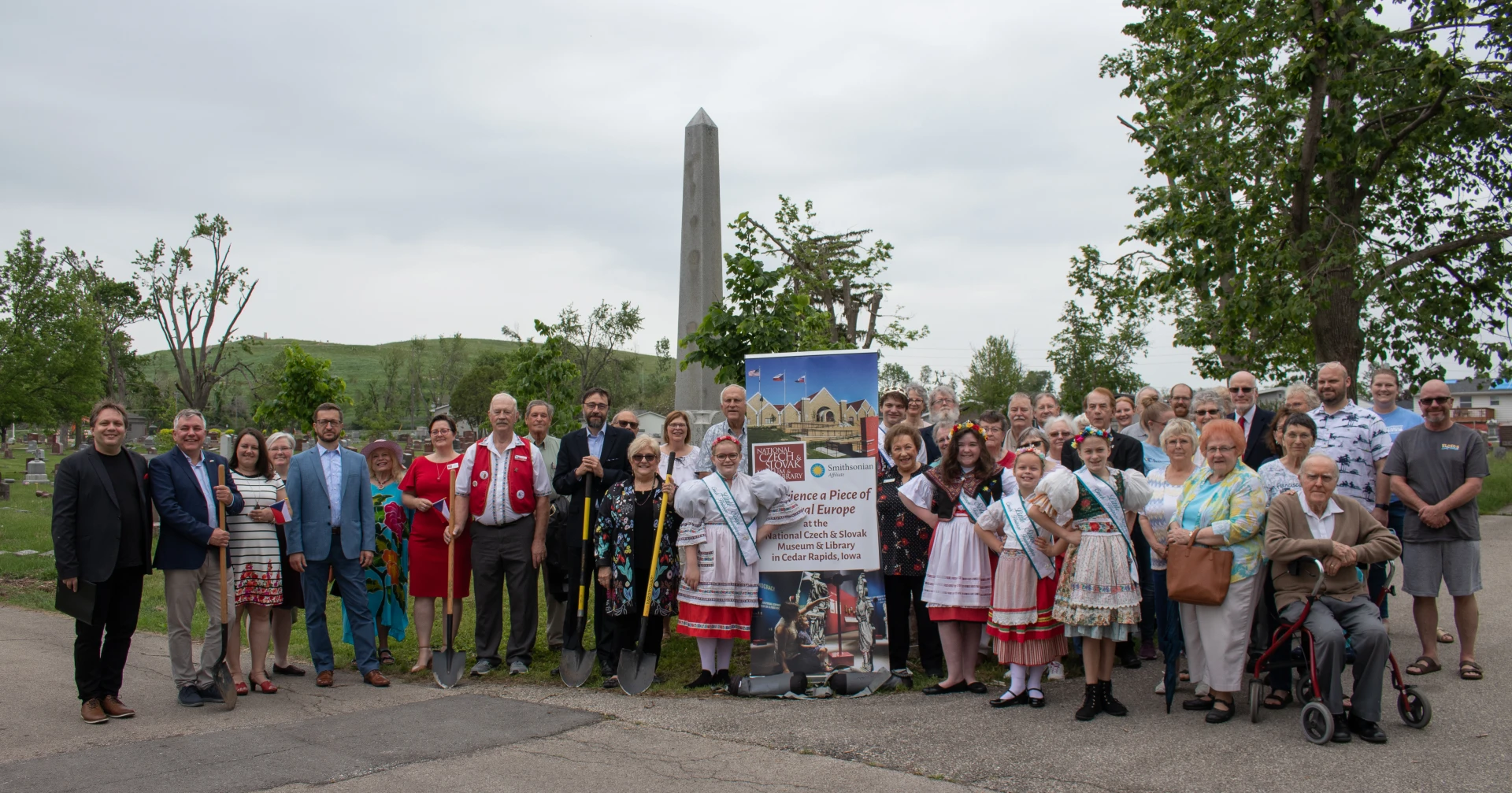
Cedar Rapids, the second-largest city in Iowa, held its first Czech and Slovak Hody National Festival. Among the invited guests were Slovak Ambassador Radovan Javorčík and Director of the Czech Center in New York Miroslav Konvalina. The program was organized by the National Czech and Slovak Museum and Library (NCSML) in Cedar Rapids. All events were sold out in advance.
A replacement for the annual gala dinner which had to be cancelled due to the pandemic restictions, the festival commenced with a “drive by” pick up of meals to drivers in front of the beautiful NCSML. Individuals who purchased the meals were rewarded with the traditional dish of roast pork, dumplings (made by the local Sokol members), and sauerkraut, as well as kolaches and rolicky.
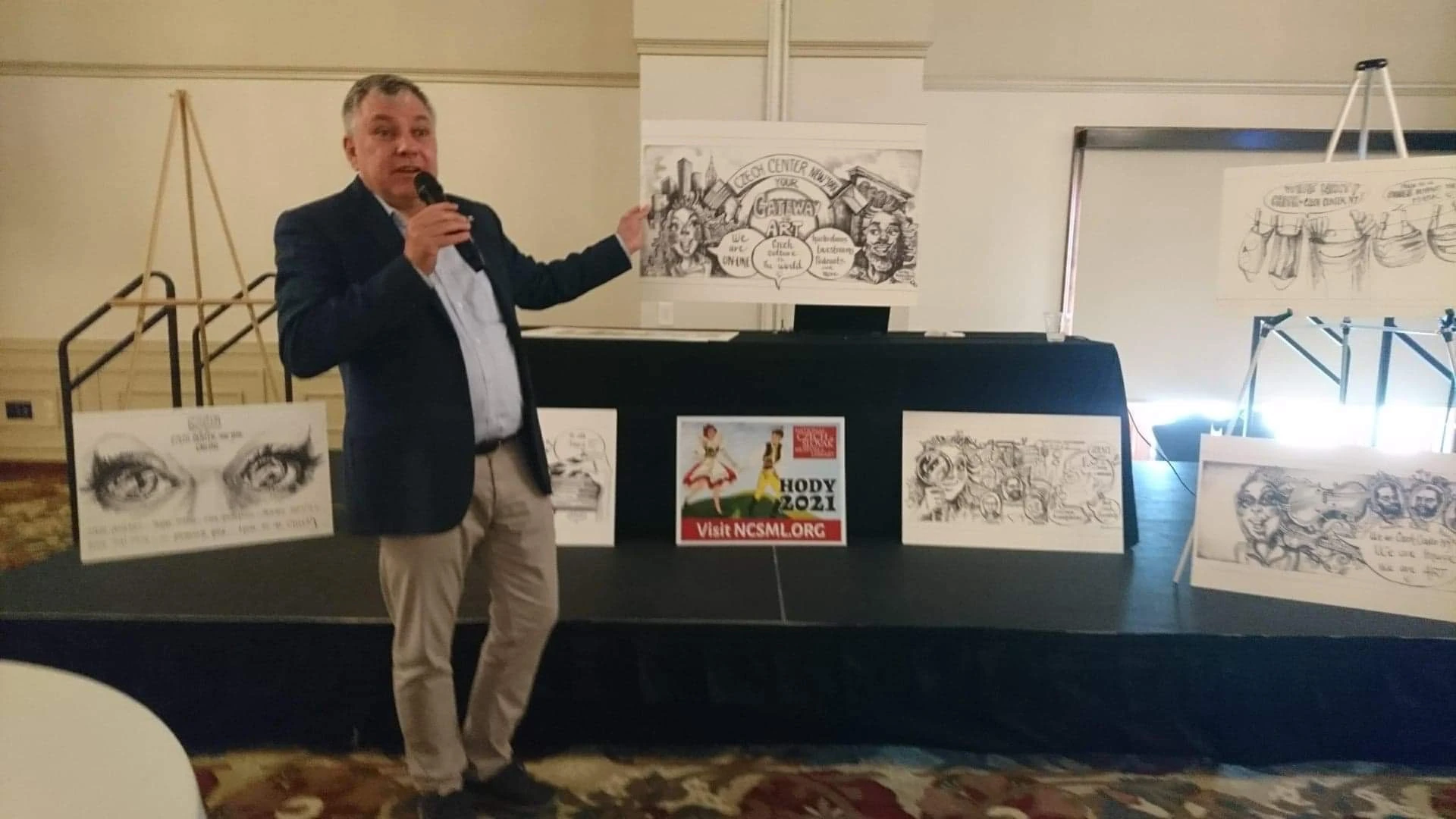
Miroslav Konvalina, director of Czech Center New York
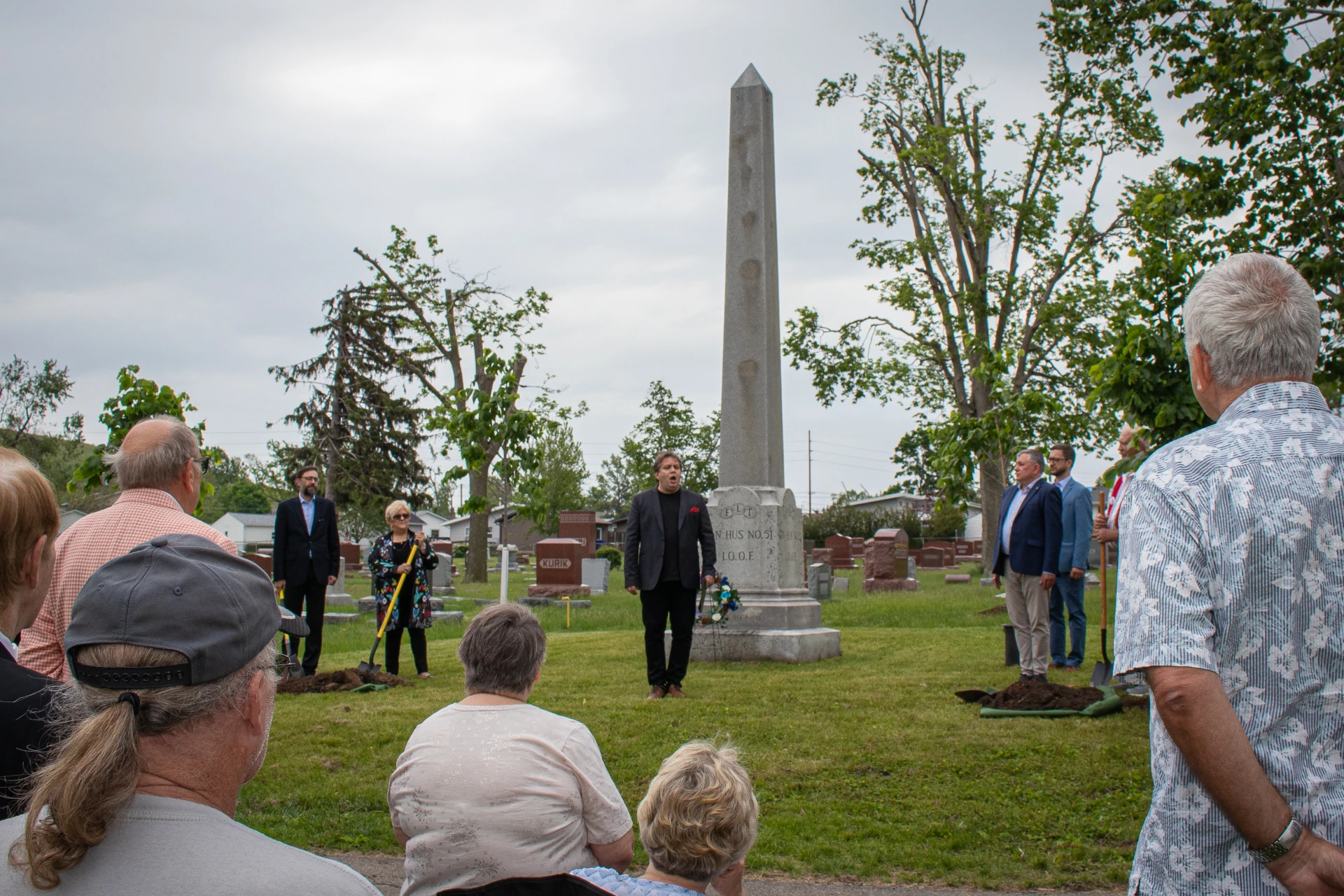
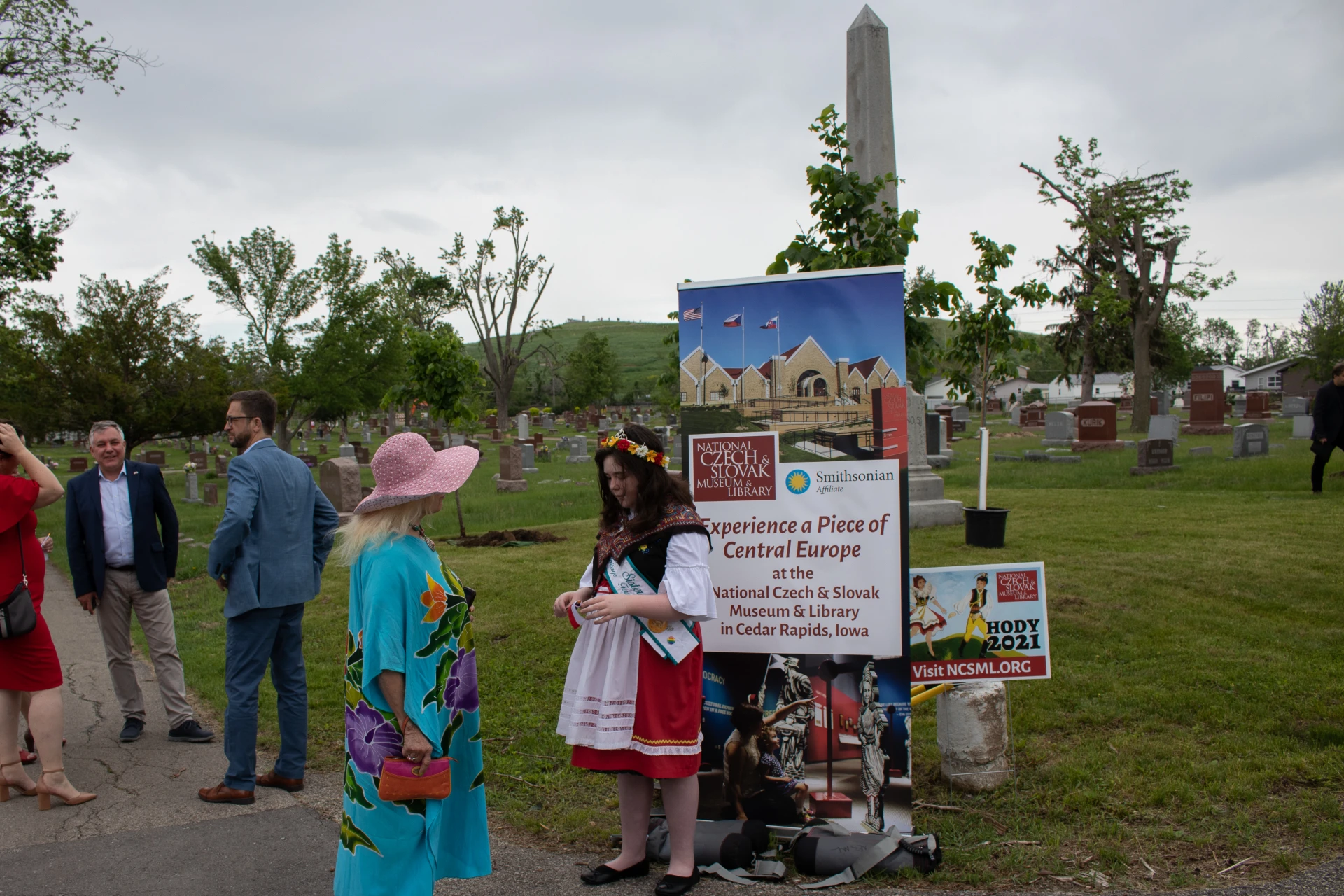
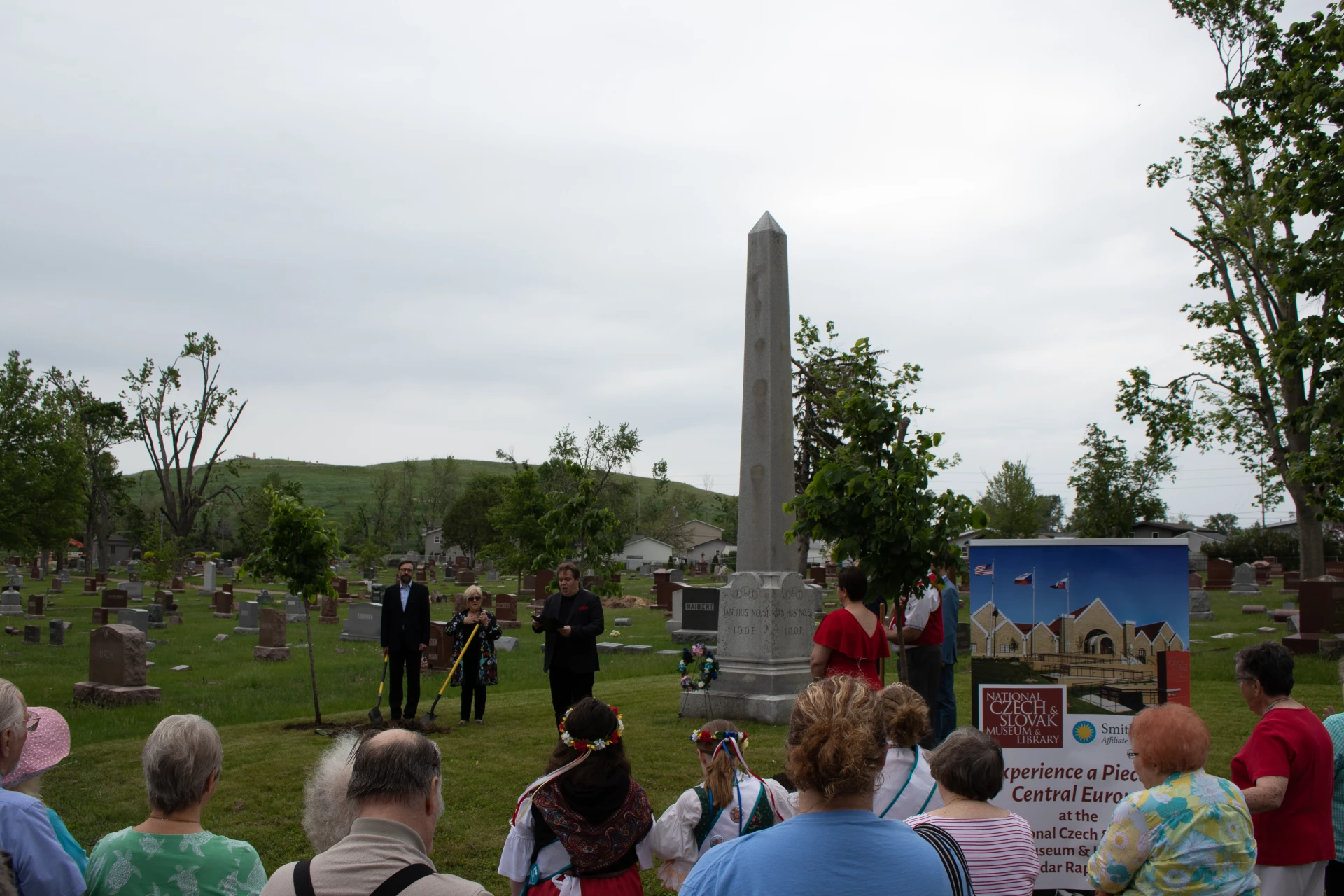
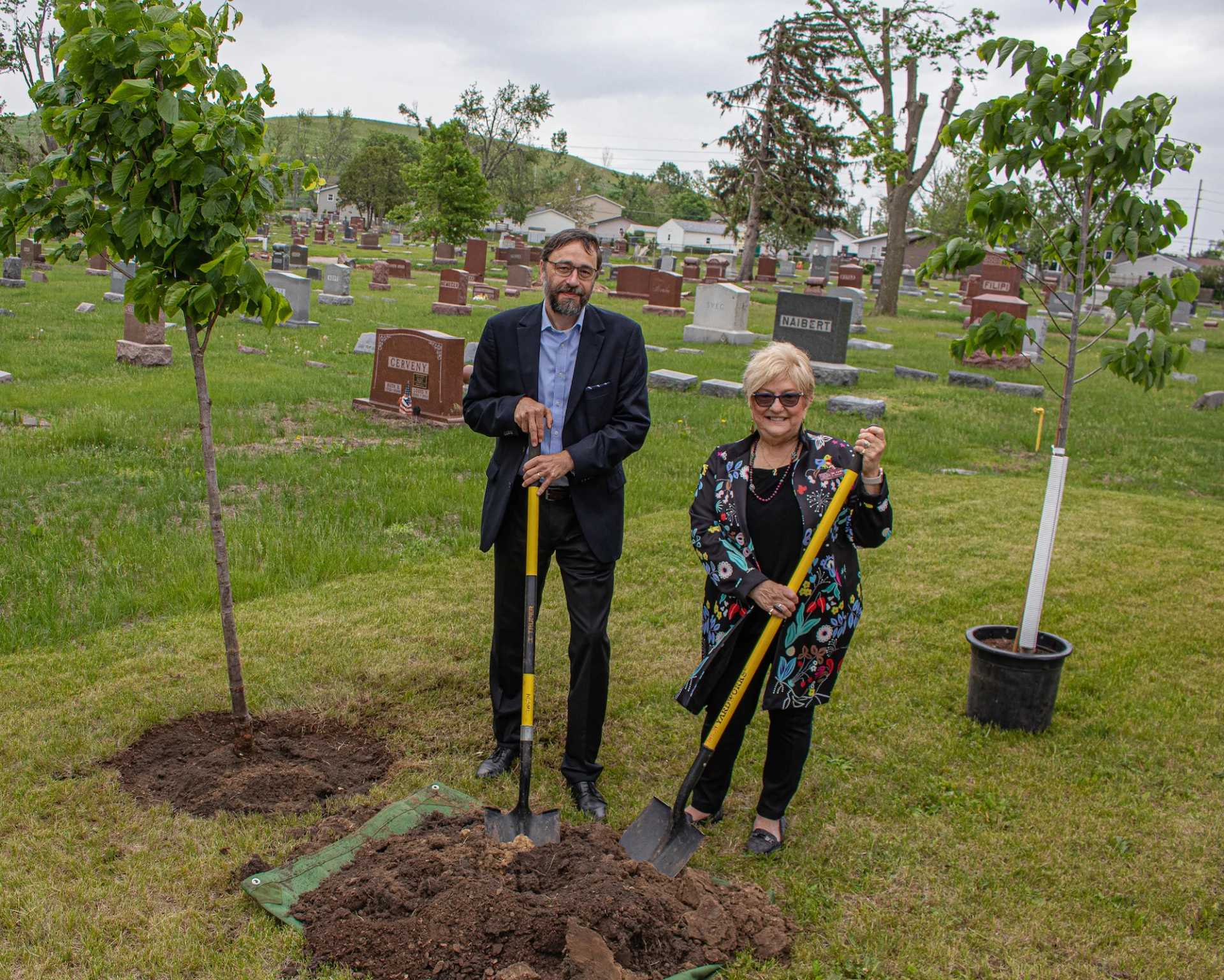
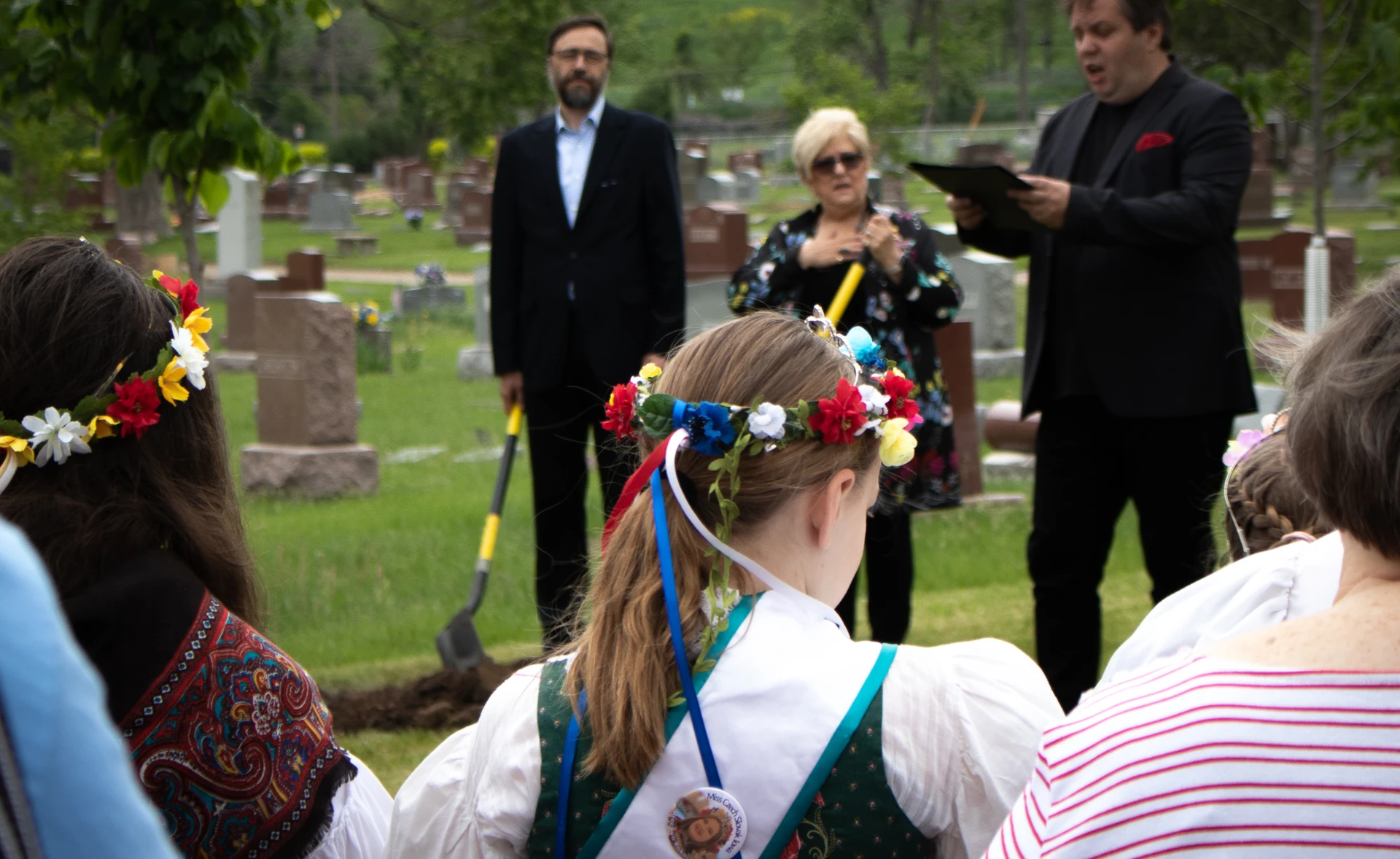
Drive-up guests were greeted by NCSML staff dressed in traditional kroje. In the morning of the following day, four American and European linden trees were planted near the Jan Hus memorial at the Czech National Cemetery, a symbolic as well as practical act to help the cemetery recover from last year’s derecho (an inland hurricane).
Festival highlights included the opening of the new Moravian Glory exhibit at the Museum by the founder of Moravian Glory Foundation Monika Vintrlikova from Atlanta, Georgia, and member of the NCSML national Board of Trustees; a presentation of the Czech Center in New York as the gateway for Czech Culture to the world by Director Miroslav Konvalina ; cooking demonstration by Ambassador Javorcik; and wine tasting featuring Moravian and Slovak wines by Dr. Steven Grief (the only dentist and wine sommelier in the US). Sunday was reserved for a concert of the Slovak operatic tenor Jozef Ivaška.
Dr. Cecilia Rokusek, President and CEO of the National Czech and Slovak Museum and Library , said: “Given the pandemic and the fact that people have been at home for over a year, we thought that it was important for NCSML to celebrate now and come together safely as a community to remember our rich heritage and culture and at the same time to begin a new tradition for Cedar Rapids, the area, and the nation.“
Among the three million people who call Iowa their home, there are tens of thousands of families who may no longer speak Czech or Slovak, but who embrace the Czech and Slovak national traditions. They attend churches which were originally Czech, and they continue making kolaches and dumplings. There are a lot of Czech place names and the names of the first Czech inhabitants can be found on houses and shops.In the early 1900’s, 28% of the population in Cedar Rapids was Czech.In 1896, Cedar Rapids was known as the “Bohemian Athens” because of its education, cosmopolitan atmosphere, both liberal and conservative character, and its literary society and cultural events.