From the light at Josef Sudek’s studio window to Jaromír Funke’s experiments with glass and shadow, photographers have long transformed the world before the lens. Today, generative tools can produce an image that looks like a photograph of a scene that never existed. Pixels and Poetics: Sudek, Funke, and the Influence of New Technologies on the Development of Photography brings these different approaches together and asks what we see in images—and why we trust them.
A photograph has never been a simple imprint of reality. The photographer chooses the subject, framing, light, and moment of exposure. Long before digital editing, photographers could transform images through staging, double exposure, photomontage, or darkroom techniques. These interventions could mislead, but they could also express a personal vision.
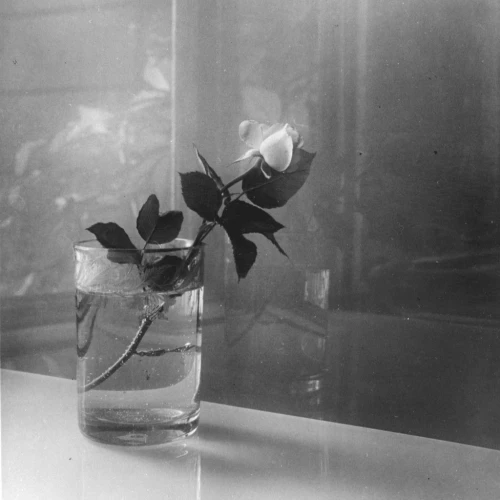
Sudek found poetry in ordinary objects, stillness, and changing light. His still lifes and studio views evoke memory and the passing of time. Funke used glass, shadow, and carefully arranged forms to create precise compositions that explored photography’s possibilities. Their approaches differed, but both began with the world before the camera.
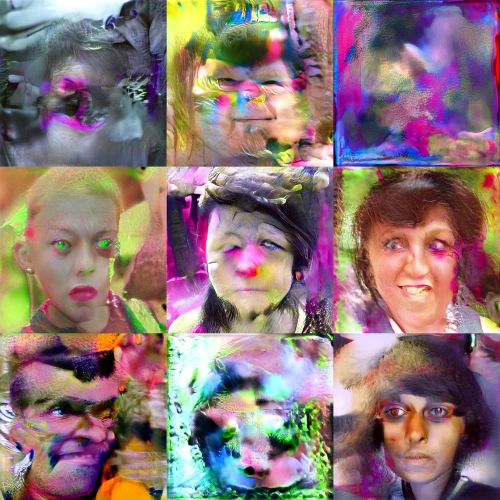
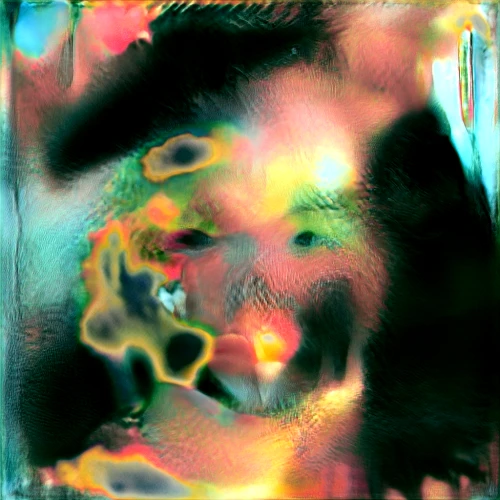
Generative technology changes that relationship. Lenka Hámošová deliberately interrupts the training of image models to create ambiguous figures and scenes. Barbora Trnková and Tomáš Javůrek examine how generated images can reinforce or challenge ideas about identity and femininity.
A synthetic image can appear to document an event that never happened. Such images can spread rapidly and influence what people believe. Pixels and Poetics therefore asks how images gain our trust—and what happens when we treat them as evidence.
The exhibition is organized by Czech Center New York with generous support from the PPF Foundation and the New York Public Library.
Participating artists: Josef Sudek and Jaromír Funke (works from the PPF Art collections), Barbora Trnková, Tomáš Javůrek, and Lenka Hámošová, with additional artists to be announced.
Curator: Johana Rittmeyer
Exhibition architecture: O plus M studio
Graphic design: Colmo Studio
Production: Sandra Karácsony
Josef Sudek (1896–1976) was a Czech photographer celebrated for his poetic treatment of light, atmosphere, and everyday objects. Trained as a bookbinder, he later studied photography at Prague’s State Graphic School and worked across fine art and commercial photography. His distinctive vision emerges in his views of Prague, still lifes, and intimate series such as The Window of My Studio and Glass Labyrinths.
Jaromír Funke (1896–1945) was a Czech photographer and a leading figure of the interwar avant-garde. His work encompassed pictorialism, constructivism, surrealism, and social documentary, continually testing photography’s expressive possibilities. In carefully arranged still lifes, he used ordinary objects, glass, light, and shadow to create striking compositions. His series Abstract Photo (1927–1929) is among his most celebrated experiments.
Barbora Trnková (b. 1984) is a Czech artist, photographer, researcher, and curator based in Brno. She examines how photographic and digital technologies reproduce dominant ways of seeing. Drawing on glitch feminism and intersectionality, she foregrounds the perspectives of survivors and those treated as less than human. Her artistic research is explored in the publication The Look of the Internalized Machine Gaze.
Tomáš Javůrek (b. 1983) is a Czech artist, programmer, researcher, and curator working with digital media, artificial intelligence, and networked systems. Through experimental tools, platforms, and exhibitions, he investigates the politics of computation and the power embedded in technology. Since 2010, he has collaborated with Barbora Trnková as the duo & (ampersand); together, they co-founded the experimental digital exhibition platform ScreenSaverGallery.
Lenka Hámošová (b. 1988) is a Slovak visual artist, designer, and researcher based in Prague. She explores how artificial intelligence reshapes creativity, authorship, and perception, combining experiments with generative models and participatory approaches to human–AI collaboration. She co-founded the Uroboros festival and initiated Prague’s Creative AI Meetups, creating opportunities for critical discussion and collective experimentation with emerging technologies.
Trevor Paglen (b. 1974) is an American artist whose practice spans photography, sculpture, investigative research, and engineering. He examines surveillance, artificial intelligence, and state secrecy, making visible systems that usually remain hidden. His work has been presented at the Smithsonian American Art Museum, Fondazione Prada, and the Barbican Centre. His honors include a MacArthur Fellowship and the 2026 LG Guggenheim Award.
Jon Rafman (b. 1981) is a Canadian artist, filmmaker, and essayist exploring how digital technologies shape memory, identity, and emotional experience. Drawing on internet subcultures, virtual worlds, and video games, he examines the increasingly blurred boundaries between life online and offline. His film Punctured Sky (2021) received the KNF Award from the Circle of Dutch Film Journalists at the International Film Festival Rotterdam in 2022.