The Prague Spring Music Festival offers four online classical music concerts for an American audience. "Spring has always been a symbol of hope, that after many long winter months everything awakens to life again. Having this in mind, 'spring' was chosen as a name for the festival by its founders in 1946. They were convinced that there must be a period of prosperity after a long war," says the director of the festival Roman Bělor. "Thankfully, we can't compare today's serious situation with the after-war period, but Prague Spring also wants to be a symbol of hope all the same."
Program of the concerts selected for streaming
Concerts will stream at 2pm ET on the Czech Center Facebook HERE.
Opening concert - May 12, 2021
PROGRAM
Bedřich Smetana: My Country
PERFORMERS
Collegium 1704
Václav Luks – conductor
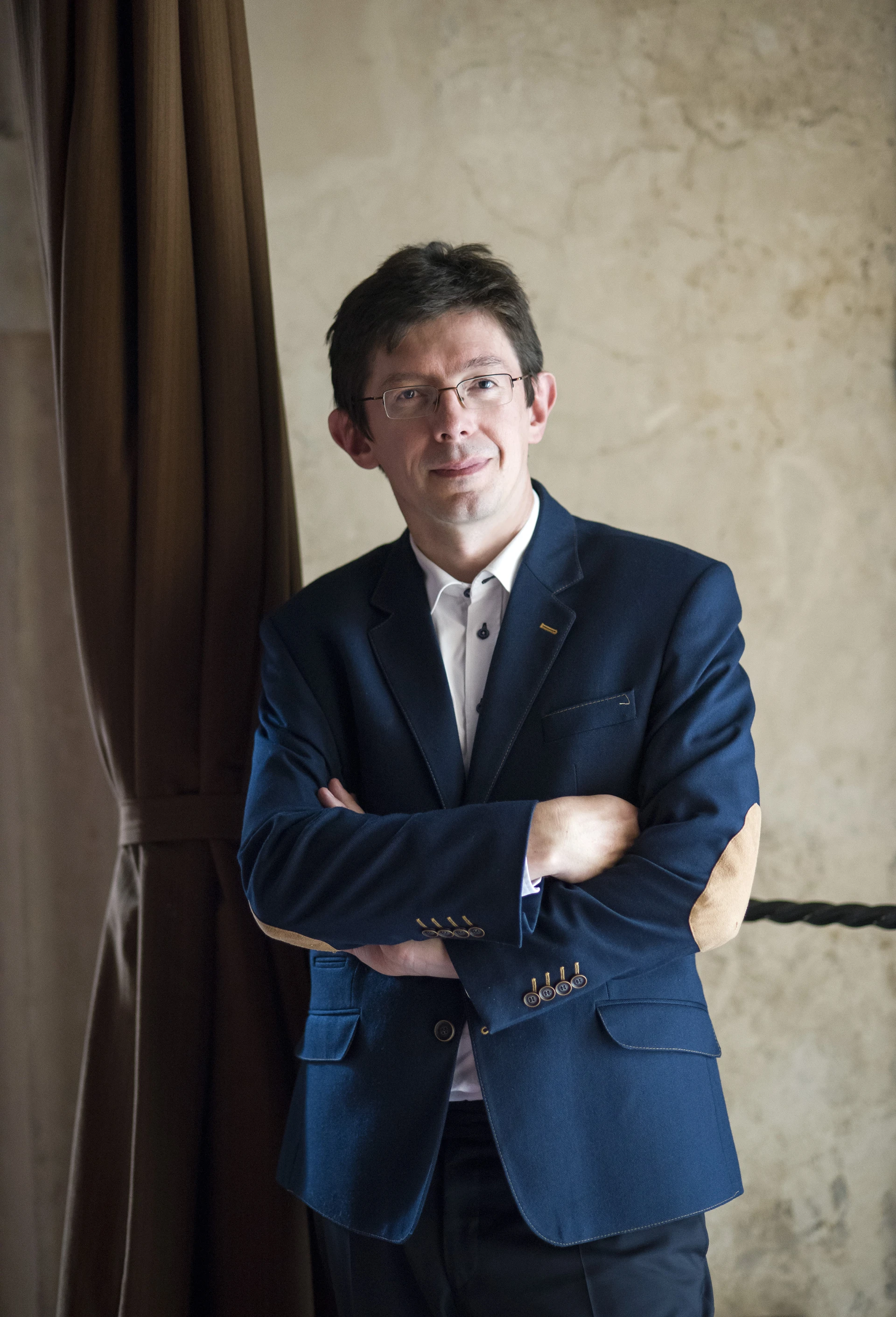
Performing Smetana’s Má vlast (My Country) at the opening concert of the 2021 Prague Spring Festival will be Collegium 1704 and the conductor Václav Luks. The originally announced performers, the Rundfunk-Sinfonieorchester Berlin and the conductor Vladimir Jurowski, have been forced to cancel their appearance because current public health measures in Germany governing the work of orchestras do not permit them to rehearse the work. “Today’s turbulent times favor bold solutions. Therefore, we have decided to put our trust in Václav Luks and his Collegium 1704, who are not only among the top Czech artists, but also have become one of the most respected ensembles of their kind in Europe. It so happens that it was at Prague Spring that they started on their path almost two decades ago,” says festival director Roman Bělor. “We have always made an effort to ensure that besides respecting tradition, the opening Prague Spring concert also brings an element of rediscovery and surprise. These are new interpretations and new ways of understanding the work by today’s musicians, who keep the work alive and still make its performing relevant in the 21st century”, says Bělor in conclusion.
“Performing Má vlast on period instruments and in the spirit of the interpretive customs of the late 19th century is an unusual challenge”, says the conductor Václav Luks. “In approaching Smetana’s iconic work, one must take into consideration not only the historical context of the composing of the individual movements of the cycle, but also the work’s noteworthy tradition of interpretation. After all, just from listening to the first recording of Má vlast conducted by Václav Talich in 1929, we realise how radically the interpretation of the Romantic repertoire has changed during the past century and how the varied palette of musical expressive resources and colours fell into oblivion in a relatively short amount of time. Our performance will not be a reconstruction for a museum. I hope we manage to present Má vlast in new colours while respecting the legacy of its ingenious creator”, maestro Luks emphasises.
This will not be the first performance of Má vlast by an orchestra using original instruments – at the 1996 Prague Spring opening concert, the London Classical Players played the work with the conductor Sir Roger Norrington. “Back then, that caused quite a stir”, says the festival programming director Josef Třeštík. “There has been considerable progress since then with the awareness of the Czech public about historically informed interpretation, and the local early music scene has flourished incredibly. Likewise, the activities of Collegium 1704 and Václav Luks in recent years show that they are far from being just leading interpreters of the music of Jan Dismas Zelenka and other Baroque composers, as they formerly presented themselves. Now, they are expanding their scope to include repertoire of the 19th century.”
On the Wings of Dance - May 20, 2021
Program
George Enescu: Romanian Rhapsody No. 1 in A major Op. 11
Camille Saint-Saëns: Introdukce a Rondo capriccioso op. 28
Igor Stravinsky: The Firebird, suite from the ballet (1945 version)
Performers
Prague Symphony Orchestra
Ion Marin - conductor
Dalibor Karvay - violin
Ion Marin
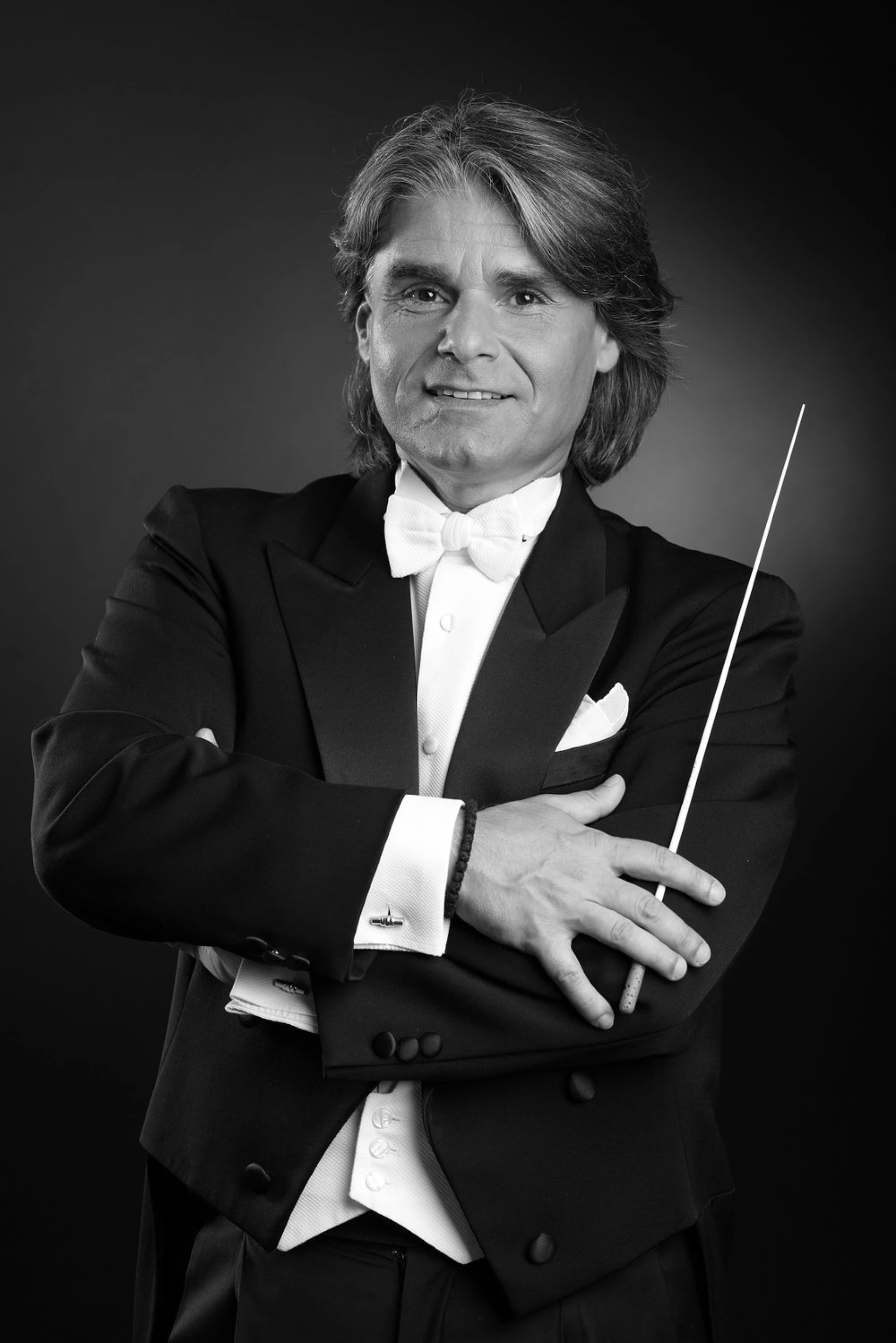
Chen will be accompanied by the Prague Symphony Orchestra under Ion Marin, one of the few contemporary conductors who have succeeded in reaching the absolute pinnacle both in the realm of opera and symphonic music. A familiar sight at the Metropolitan Opera in New York, Italy’s La Scala and the Bavarian State Opera, he also appears regularly with leading orchestras in Europe, such as the Berlin Philharmonic, St Petersburg Philharmonic, Gewandhausorchester Leipzig, London Symphony Orchestra and the Orchestra dell’Accademia Nazionale di Santa Cecilia. At the start of the 2014/2015 season he was appointed Principal Guest Conductor of the Hamburg Symphony, orchestra-in-residence at the iconic Elbphilharmonie.
Marin has worked with a series of big names on the concert platform, among them Maxim Vengerov, Gidon Kremer, Hélène Grimaud and Martha Argerich, with whom he performed Maurice Ravel’s Piano Concerto in G major at the Berlin Philharmonie in 2007. The Berliner Morgenpost wrote at the time: “No-one could have missed it. In her interpretation the work acquired the form of a musical monument of intimate character: simply unforgettable. Ion Marin stood by her side on the Berlin Philharmonic podium, conveying a sense of conviction and understanding.”
Ion Marin’s recording catalogue includes more than forty titles for which he received the Diapason d’Or, Germany’s Preis der deutschen Schallplattenkritik and three Grammy nominations. He won the prestigious Echo Klassik Award in 2012. That same year he established Cantus Mundi in his native Romania, a project focusing on the musical education and integration of socially disadvantaged and disabled children.
There’s yet another dimension to the evening’s program, as Ion Marin tells us. “The program has its inspiration in one of the important characteristics of Czech musical heritage, namely the transfiguration of folkloric sources,” he states. “From Lalo’s wealth of themes that later inspired Tchaikovsky to write his violin concerto, to Enescu’s innovative blending of urban folklore in a symphonic masterpiece, popular melodies enter the concert hall in all their beauty. Stravinsky’s Firebird in the original version explores in an audacious way the harmonic and rhythmic vibrancy of Russian folklore, opening the gates to modernity,” he explains. “As usual, the choice of program combines musical research with the emotional richness that the artists wish to share with the public. Together with Ray Chen, we look forward to this musical voyage,” Marin concludes.
Prague Spring Debut — May 26, 2021
PROGRAM
Witold Lutosławski: Little Suite
Robert Schumann: Concerto for Cello and Orchestra in A minor Op. 129
Jean Sibelius: En saga
Antonín Dvořák: A Hero’s Song Op. 111
PERFORMERS
Prague Radio Symphony Orchestra
František Macek - conductor
Johannes Moser - violoncello
A real devotion to artistic perfection
For every performer, a debut concert is a challenge, and especially when it takes place before a domestic audience. František Macek is one of the most talented young Czech conductors. So far, he has been working mainly in Scandinavia and Poland. “He capitalizes on these experiences in a varied program combining the music of Antonín Dvořák and Robert Schumann with an exciting piece by Jean Sibelius that is less well known in this country and with a classic of Polish music by Witold Lutosławski,” says the festival dramaturge Josef Třeštík. “I hope that thanks to this debut concert, Macek will establish contacts with Czech orchestras, and that he will win over the Prague public with the energy and intensity he devotes to every work.”
František Macek
František Macek comes from a musical family. All four of his siblings are musicians, and his father František is an organist, composer, and conductor. After having studied at the Academy of Performing Arts in Prague and at the Royal Academy of Music in Stockholm, maestro Macek came to the attention of the professional conducting world when he won the competition for the position of assistant conductor of the National Polish Radio Symphony Orchestra (NOSPR), which boasts one of the best modern halls in Europe. “My task was to do rehearsals in advance with the orchestra for concert programmes of the chief conductor Alexander Liebreich and for Lawrence Foster, then I assisted them with rehearsals in Katowice or on concert tours”, says Macek, recalling his activities in Poland. He was able to expand his repertoire to include works by Gustav Mahler, Alexander Zemlinsky, Arthur Honegger, Krzysztof Penderecki, and many other composers. Ordinarily, it is difficult for a young conductor to get experience with such major symphonic works and with big compositions for vocal forces and orchestra. “Last but not least, I had a chance to work with that excellent orchestra on educational projects, concerts for allied institutions, and a subscription concert of my own.” Macek has taken part in masterclasses with David Zinman, Bernard Haitink, and Daniele Gatti. Thanks to that, he has had the opportunity to appear with the Tonhalle-Orchester Zurich, the Lucerne Festival Orchestra, and the Orchestra Giovanile Italiana. He was also selected to the prestigious Aspen Conducting Academy in the USA. In the Czech Republic, he has collaborated with the Prague Symphony Orchestra, the Prague Philharmonia, and the Pilsen Philharmonic. With the Prague Radio Symphony Orchestra, with which he is appearing in concert for the first time in his Prague Spring Festival concert debut, he has collaborated on a recording project. With his talent, he has captured the attention, for example, of Manfred Honeck, the music director of the Pittsburgh Symphony Orchestra. About him, maestro Honeck said: “František is a musical personality of the highest order, and he works carefully with true devotion to artistic perfection. His performing is heartfelt and enchanting.”

Closing concert – June 3, 2021
Program
Gustav Mahler: What the Wild Flowers Tell Me, 2nd movement from Symphony No. 3, arranged by Benjamin Britten
Benjamin Britten: Les Illuminations Op. 18 for high voice and string orchestra
Ludwig van Beethoven: Symphony No. 6 in F major Op. 68 “Pastoral”
Performers
Czech Philharmonic
Mark Wigglesworth - conductor
We need to regain our confidence
“It will be very special to perform at the Prague Spring Festival in a year in which so much healing has to begin. We need to regain our confidence, a confidence that can be led by the arts. The Prague Spring Festival has always had faith in the future. We need to share that faith now more than ever”, maestro Wigglesworth says.
Program note
The symphonies of GUSTAV MAHLER (1860–1911) stand on the boundary line between programme and absolute music, two of the movements characterising 19th century orchestral writing. Ludwig van Beethoven, a master of musical structure, endured as a major compositional example and, under the influence of literature, philosophy and other spheres of knowledge, new subject matter found its way into music. Mahler wrote Symphony No. 3 in the years 1892–1896. Its individual parts originally had programme titles, and the symphony as a whole was to have been called The Gay Science after the book of the same name by Friedrich Nietzsche. The first movement “Pan Awakes. Summer Marches In” was a celebration of the rebirth of nature; the second was known as “What the Wild Flowers Tell Me”; the third was “What the Animals in the Forest Tell Me”; the fourth movement originally bore the designation “What Man Tells Me”, followed by “What the Angels Tell Me”; and the final Adagio was entitled “What Love Tells Me”. Mahler later abandoned his titles, however, they were not forgotten and the symphony’s programme subtext remained.