Czech Center New York presents another graduate concert of a talented student of Mannes School of Music. This time, pianist Diyora Tursunova will perform the works of Bohuslav Martinů, Miloslav Kabeláč, Francis Poulenc, Alberto Ginastera, Khurshida Khasanova and Emilio Teubal.
Pianist Diyora Tursunova, a student from Mannes School of Music, will perform piano works by prominent Czech composers Bohuslav Martinů and Miloslav Kabeláč as well as the compositions by Francis Poulenc, Alberto Ginastera, Khurshida Khasanova and Emilio Teubal.
Registration here.
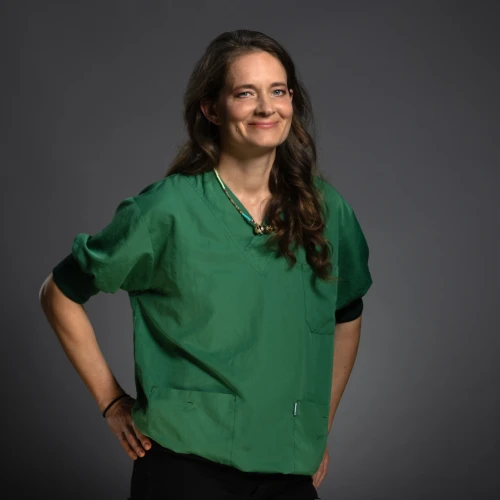
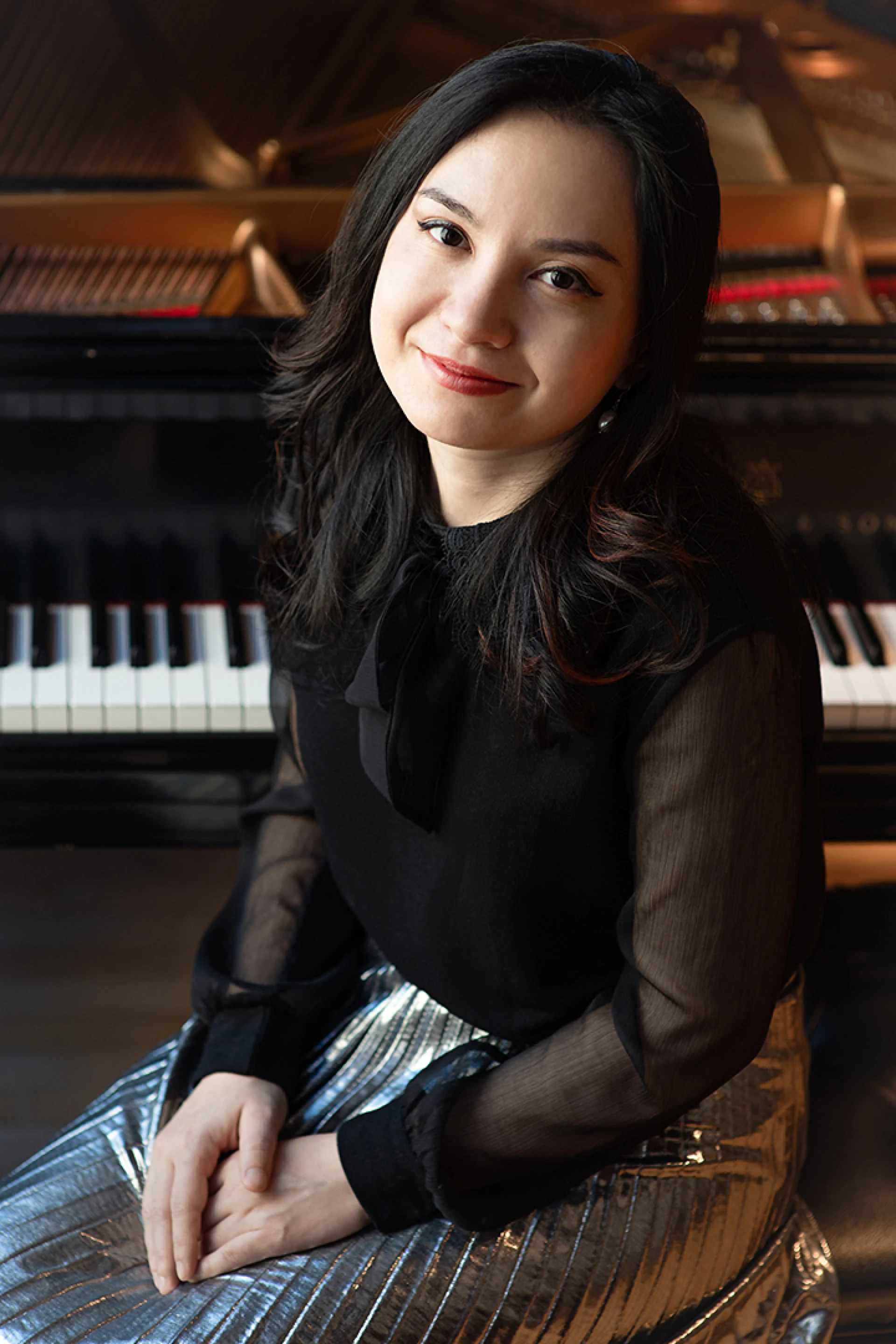
Diyora Tursunova. Photo credit © Sergio R. Reyes
Diyora Tursunova is a pianist currently based in NYC. Growing up in Tashkent, in the family of musicians, Diyora began studying music and piano performance at the Specialized Music School named after V. Uspensky , at the age of seven.
She completed a Master of Music at Syracuse University with the Teaching Assistantship and currently graduating from Professional Studies Program at Mannes School of Music.
Diyora has performed actively in the US and abroad, including performance at the Carnegie Hall Weil Hall, Mannes Sounds Festival, German Consulate General in New York, Ensemble-Akademie Freiburg, Hochschule für Musik Freiburg in Germany, Bohemian National Hall in New York.
She is a laureate of international and state competitions including the International Piano Competition “Le muse” in Italy, Heddy Kilian Empire State Competition in Rochester, NY, the Golden Key Festival Clara Schumann Internaional Competition and others.
She received the master classes of contemporary music with the members of Ensemble Recherche in Freiburg, Germany and collaborated in the international festival "Theater + Music with the Omnibus Ensemble. Her repertoire includes different styles and eras: in addition to classical piano repertoire, she widely performes the compositions of living composers.
Bohuslav Martinů was a fantastically inspired musician – something one could perhaps put down to a natural consequence of being born at the top of a bell tower, overlooking the beautiful East Bohemian landscape above the town of Polička, at the end of 1890. If tales of his youth are true then we can say that he was composing music for about 60 of his 68 years, eventually amassing half a dozen symphonies, some 30 operatic and ballet pieces and hundreds of works of smaller scale.He was a prolific composer whose works varied greatly in quality; at its best his music shows vitality, charm, and originality. He assimilated the rhythmic and melodic traits of Czech folk music into a modern, Neoclassical idiom that shows a clarity and precision characteristic of French music.
Miloslav Kabeláč is one of the most important Czech composers of the 20th century. He can indisputably be described as the greatest symphonist of the generation after Bohuslav Martinů.
Kabeláč was born in Prague. In 1928–31 he studied at the Prague Conservatory as a pupil of Karel Boleslav Jirák, simultaneously (in 1930–31) he was a pupil of Alois Hába, the pioneer of the use and integration of microtones into modern music and later of 12-tone techniques. Kabelac combined elements of 12-tone composition with the influence of Gregorian chant and of folk music. In 1932–54, Kabeláč was employed by Prague Radio. From 1957 to 1968 he worked as a teacher at the Prague Conservatory. He had heralded the successful creative development of his pupils - Zdenek Lukas, Jan Malek, Jaroslav Krcek, Jan Slimacek and Ivana Loudova. Among others his, work has been quoted by Jaroslav Krcek in his violin concerto, and by the Slovak composer Roman Berger in his composition for organ Exodus II.
During his life Kabeláč was active in Umělecká beseda, in the Federation of Czechoslovak Composers and other organisations. In the 1960s he tried to revive contacts with Western modern music and composers, but after the 1968 Soviet invasion of Czechoslovakia he was mostly silenced. His works were essentially performed only abroad from then on. He was active at the Service de la Recherche de I O.R.T.F. and the Centre for Electronic Music in Utrecht. He passed the newly-won knowledge over to the Czech creative public through his seminars of electronic and concrete music, established by Radio Prague between 1968-70.